
Hiking Lloret de Mar – Costa Brava’s Stunning Coastline

20

Every country has a hidden spot that entices visitors to return and explore after visiting for the first time! Lloret de Mar may just be that very spot in Spain, though many would argue that the Spanish are spoiled for choice with a plethora of hidden gems around this beautiful nation. This stretch of Costa Brava coastline is infamous for the gorgeous beaches but after visiting here, it is the rugged landscape that makes this a perfect spot to go exploring. Hiking Lloret de Mar is clearly a popular choice among locals and tourists alike, and after seeing some of the pictures we captured, I am convinced you will understand why!

Lloret de Mar – A Hidden Gem

As soon as we heard that TBEX Europe was going to be held in Lloret de Mar, we were excited to find out more about this spot on the Costa Brava. A short drive from Barcelona ensures that Lloret de Mar is an easily accessible location yet this destination offers a number of attractions that makes it very unique in comparison to the more infamous city.

lloret de mar costa brava spain

It’s plausible that Lloret de Mar hides in the limelight of Barcelona but when you see the beauty that lies within this coastal town, you will soon find out why this is such a popular tourist attraction.

Hiking Wilderness

Of course a visit to the Costa Brava wouldn’t be the same without taking in the gorgeous beaches along this stretch of Spanish Riviera. But the beauty of Lloret de Mar is when you step away from the beach and begin exploring the miles of hiking trails that take you along the rugged coastline and beyond into the beautiful Spanish wilderness (or so it seems as you start hiking as you have no real clue where you are going!)

hiking lloret de mar

After experiencing the beauty of the landscape in Lloret de Mar, I can’t think of any better location in Spain to take morning walk and take advantage of the ‘golden hour’ to capture some of those memorable sunrise shots.

hiking lloret de mar

But of course these hiking trails are equally as rewarding at any time of the day, including just before sunset which was when we really explored the majority of Lloret de Mar’s coastline.

Lloret de Mar to Fenals Coastal Path

The beautiful coastal footpath between Fenals and Lloret de Mar offers visitors the perfect opportunity to capture the sense of ruggedness, fine architecture and ultimate beauty. We headed to the heart of Lloret de Mar and began the route taking in some really cool monuments and attractions along the way.

lloret de mar jagged rocks

The Fisherman’s Wife statue is an iconic representation of Lloret de Mar welcoming anyone to the coastal town.

fishermans wife lloret de mar coastal path

The views from the plaza where the statue stands are stunning and if you are in the least bit interested in fantasy, legend has it that anyone who touches the foot of the monument while peering out across the ocean will have their wish come true! I’m not sure that I am a firm believer in this, but after appreciating the beauty along Lloret de Mar’s coastline, I could probably be swayed.

lloret de mar love lock

This coastal path is also home to Lloret de Mar’s very own ‘love lock’ collection though whether you consider to be a positive or negative addition to the landscape is entirely your choice!

Hiking along the Mediterranean in Lloret de Mar is for the most part pretty straightforward with a number of staircases and weaving turns the most complex that visitors are faced with.

hiking lloret de mar to fenals coastal path

However, there are a couple of opportunities for the more adventurous travelers to head on to the jagged rocks and inlets that veer out from the coastline.

hiking lloret de mar

The distinctive Castle of Sant Joan is what separates the Lloret de Mar beach and Fenals beach and taking a trip to this architectural masterpiece is yet another rewarding experience of hiking this coastal path. I never envisioned stumbling across such beautiful landmarks while taking a relaxing walk by the ocean – welcome to Lloret de Mar!

relax by the Mediterranean in Lloret de Mar

Why not take a moment to relax and take in the stunning scenery, I can’t think of many better spots to watch the sunset drop over the Mediterranean.

Floral Beauty

Stunning views across the ocean and relaxing to the sound of the waves crashing against the rocks are not the only benefits of hiking along the coastal paths of Lloret de Mar. Spring is a perfect season to visit Lloret to take in the gorgeous wild flowers that grow in this part of the world.

floral beauty lloret de mar

With a warm, temperate climate, it is no surprise that floral species flourish so much in Lloret de Mar. Although we didn’t get as far as exploring the gorgeous Santa Clotilde Gardens, the natural floral beauty was enough to enhance the experience of walking through a sea of picture perfect scenery.

Summary

Visiting Lloret de Mar was primarily for our TBEX experience but I am delighted that we had time to explore this hidden gem along the Costa Brava coastline. The coastal path that we explored is just one of the many hiking trails you could take around Lloret and a return visit to this part of Spain is definitely on the cards, even to just experience more of these beautiful landscapes.

I’m fascinated by beautiful scenery and what we have here on this Earth.

Natural beauty is much more rewarding than exploring artificial scenery. I am a huge proponent of Matt Lanter’s quote and feel that Lloret de Mar is a perfect example of this beautiful scenery that is sometimes forgotten when many travelers fail to explore those ‘off the beaten path’ locations around the world.

Weekend Wanderlust


Eat Spanish Cuisine on a Devour Barcelona Food Tour

9

Do you consider yourself to be a food critic or wine connoisseur? Don’t worry if you don’t meet the definition of these because neither do we, but if you are heading to Barcelona anytime soon, we have the perfect experience that does not require you to be a food or beverage expert. Thanks to Devour Barcelona, an amazing food tour around this beautiful city is available that will truly introduce you to the local specialties that make Spanish cuisine such a huge attraction.

Welcome to Devour Barcelona

When you start considering taking a food tour around a city like Barcelona, it’s nice to have a better understanding as to what to expect throughout the time you spend with the tour guide. Look no further than Devour Barcelona’s mission:

To give our guests an insider’s peek into the real Barcelona, and a taste of the city’s true local cuisine.

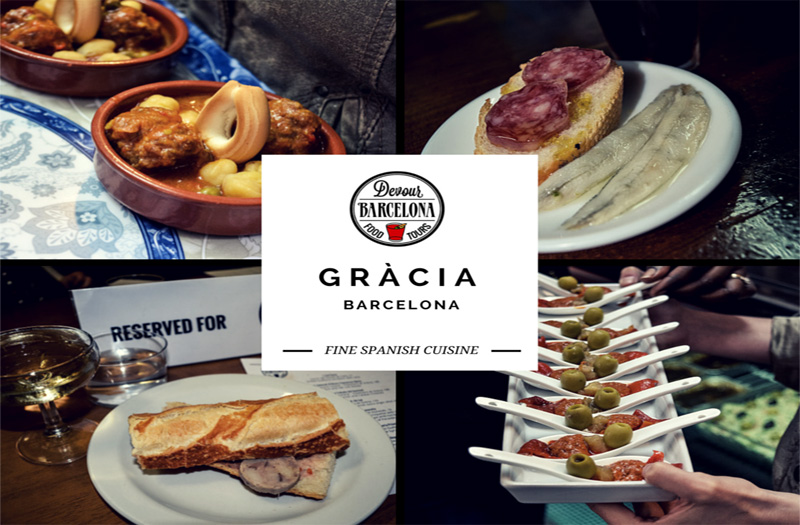
Joined by a number of fellow bloggers (we were all in the Catalan area because of TBEX in nearby Lloret de Mar) and other travelers, we had an excellent blend of cultures in our group. Meeting outside the Valentino store on Passeig de Gracia, we were excited about the 4 hour food tour around the Gràcia neighborhood.

devour barcelona food tour

What Spanish cuisine are you most looking forward to trying? This was the question posed by our amazing guide, Renée, prior to our food tour beginning. I am not afraid to admit that we both looked at each other with a blank face, hoping that Renée would start with someone else! Ok so we all know that Spain is famous for their tapas and cava, but aside from that my knowledge of Spanish culinary delicacies was rather limited.

Our Food Tour

Are you ready to start salivating over this delicious cuisine? I hope that I won’t completely spoil all of the surprises by sharing our experiences, but I am convinced that after reading this and seeing the amazing pictures, you will be ready to book your very own Devour Barcelona food tour! If not…well, Spanish cuisine is simply not for you.

Renée handed us a guide of the nine very unique establishments that we would be visiting throughout the morning and early afternoon. Each location provided something very different, yet remaining local to the Catalan community and providing a true reflection on Spanish cuisine.

gracia neighborhood barcelona

As we started to walk around the Gràcia neighborhood, Renée shared with us that many people that live in Gràcia consider themselves to be separate from Barcelona. So much of the architecture and local way of life is reminiscent of quaint, European villages with locals visiting markets for their groceries rather than supermarkets that are destroying local communities.

Let’s take a tour with Devour Barcelona and see exactly what we experienced in Gràcia and how we rated each of these local delicacies!

barcelona food tour

Can Tosca

Only in Spain could you get away with drinking sparkling Cava at 10:00AM but that is the norm in the region of Catalonia. Our tour started at Can Tosca that offered a glass of Cava alongside a delightful grilled botifarra sandwich. If you are not familiar with botifarra, it is a Catalan pork sausage with a hint of spice and provided us with a great way to start our food tour.

can tosca devour barcelona food tour

This was one of my favorite stops on the tour and I would highly recommend checking out Can Tosca regardless of whether you decide to participate in a food tour.

barcelona food tour

Who wouldn’t want to start the day with a botifarra sandwich and sparkling Cava! I know I’m sold. Heather wasn’t as much of a fan of the botifarra but I will do my best to convince her otherwise the next time we visit Can Tosca!

can tosca botifarra sandwich and cava

Mercat de l’Abaceria Central

A short walk from Can Tosca took us to the heart of Gràcia – The Mercat de l’Abaceria Central! If you are looking for a spot to catch up with your fellow locals, or perhaps just taking in the experience of shopping in a local market, this is the perfect location.

devour barcelona food tour market

A number of stalls are setup inside the doors offering a plethora of Spanish delicacies, though for the locals these are just everyday items that satisfy their palettes.

barcelona food tour olives

Two different stops on our food tour took place inside the Mercat de l’Abaceria Central. Our first experience took place at Selecció d’Olives i Conserves Gloria. Unfortunately, I am not at all a fan of olives (green or black) so this was not one of my favorite stops but from everyone else’s facial expressions it seems this was a pretty  good choice on the tour. A trip to Spain wouldn’t be the same without at least sampling olives!

Selecció d'Olives i Conserves Gloria

The second stop was right up my alley – La Trobada del Gourmet! A selection of cheeses are available here and we sampled three very distinct local favorites that were all delicious. The Manchego cheese that we tried was definitely my favorite but all three offered something very unique.

devour barcelona food tour

The market is so much more than just a selection of cheeses and olives. From fresh fruit and vegetables to fresh eggs, there is enough to wet your appetite just from looking at the food!

devour barcelona food tour

Oli Sal

Do you know the real meaning of ‘extra virgin olive oil’? Unfortunately in the United States, we are all led to believe that many of the mainstream products we see on the supermarket shelves are ‘extra virgin’.

oli sal devour barcelona food tour

This is just false advertising and only when you sample the very finest ‘extra virgin’ olive oil in Spain will you realize the difference!

oli sal olive oils

Our next stop took us to Oli Sal, home of some of the finest olive oils from around the world. We headed back to the tasting room and sampled three very different olive oils.

barcelona food tour

Although I have never been a huge fan of olive oil, I can now attest that when you try a ‘good’ olive oil, it is nothing like the poor quality we associate with supermarket brands!

olive oil barcelona food tour

L’Anxoveta

Visiting L’Anxoveta is all about the hands-on experience!

l'anxoveta tapas

Make your very own ‘pa amb tomàquet’ after watching Carlos, the restaurant’s expert provide step by step instructions on how to really make this delicious yet simple tasting. Of course if you don’t like tomatoes, you may not like this bread but again I was open-minded and really enjoyed the overall experience.

pa amb tomàquet

The basic process involves rubbing a tomato across a slice of bread and then sprinkling some good quality olive oil across this.

bomba devour barcelona food tour

We also experienced a ‘Bomba’ potato and ground beef croquette with brava sauce and alioli. This was one of the spicier foods we tried on the tour but given my fondness of this, it was one of my favorites. The small matter of a caña or a local wine was a perfect accompaniment for this cuisine.

cana barcelona food tour

Pastisseria Principe

A slight change of direction yet still in the heart of Gràcia was a visit to a Syrian bakery. All of the delightfully decorated desserts here are home-baked, a real credit to the owner who moved from Syria and met his Spanish wife in Barcelona and has never looked back.

principe syrian bakery barcelona

Thousands of these perfectly manicured desserts are made on a daily basis and the difficult decision is figuring out which ones to try.

syrian bakery barcelona

I tried a double chocolate with walnut and Heather opted for Renée’s recommendation of the rose water pistachio, both of which were tasty sweet treats to break up the savory samplings we had earlier in the tour.

devour barcelona food tour

Bodega Ca’l Pep

After six food and drink tastings, it was time for the infamous ‘hora del vermut’. Stereotypically an old tradition of having the ‘vermouth hour’ around lunchtime, the Catalan communities have continued to emphasize the importance of keeping this tradition going. And who are we to argue with that!

Renée directed us to a gorgeous, antiquated bar named Bodega Ca’l Pep which looked like your typical hang-out spot for older generations to grab a drink, maybe play cards and watch their beloved FC Barcelona on tv!

Bodega Ca'l Pep

The quintessential look and feel of this bar was a perfect setting to sit down and sample vermouth. Served in a small shot glass, I was anticipating a strong liquor taste which at 1:00PM was going to give us all that much needed spark to finish the remainder of the tour.

Surprisingly the vermouth was sweet and honestly was not particularly strong, though as we all know those drinks can be the most dangerous!

hora del vermut bodega ca'l pep

The vermouth was not the only treat here. A little side dish of pickled anchovies and fuet (thin Catalan sausage) provided a nice twist and accompaniment for the vermouth. Can you blame us for wanting to stay here longer to try more of this fortified wine and pickled gourmet food selection?

anchovies bodega ca'l pep

La Botigueta del Bon Menjar

Although we didn’t sample any Spanish paella on our food tour, our visit to La Botigueta del Bon Menjar offered our best chance at purchasing some authentic paella. Everything inside this little corner shop is made by José. He serves home-cooked Catalan food in his family’s bean shop and this is a really cute spot to sample this fine cuisine.

devour barcelona food tour

I wasn’t a huge fan of the escalivada and romesco pintxo which was yet another ‘olive’ sampling but it was well worth the wait for José’s legendary homemade meatballs in a bean and sweet pea gravy.

La Botigueta del Bon Menjar barcelona food tour

Pastisseria Ideal

The final leg of our food tour took us to another enticing bakery with so many amazing pastries and dessert selections to choose from.

barcelona bakery

A final sweet treat included a mini cremat along with either tea or coffee, ensuring this is a delightful way to end the tour and offer a moment to reflect on everything you experienced around Gràcia.

mini cremat pastisseria ideal

Bakeries and delicatessens are always huge hits so it was no surprise to see everyone in the group staring at the wide selection and wondering whether their waistlines could take any more of these scrumptious desserts.

devour barcelona food tour

Summary

Whether words can do this food tour enough justice I am not sure! However, what I can say is that thanks to Renée and Devour Barcelona, they provided us with an amazing experience of authentic, Catalan cuisine. Many of these hidden gems will likely never be visited by traditional tourists unless you participate in a tour like this and are introduced to the amazing cuisine available.

Favorite cuisine? I would have to go with the botifarra sandwich accompanied with a glass of sparkling Cava at Can Tosca! I know this was our first stop but it was a perfect start to this tour. Heather’s favorite was the mini cremat at Pastisseria Ideal but who could blame her because this was a small moment of heaven!

Depending on your tastebuds, there will be something along this tour that really intrigues you. The sweet treats are amazing and well…who wouldn’t want to continue the trend of the ‘hora del vermut’ – I don’t know about you but WE ARE DEFINITELY ON BOARD!

Disclaimer – We were guests of Devour Barcelona on this food tour and would like to thank them for their hospitality. These are solely our personal opinions/experiences and we were not financially compensated for this post. 

Why Visit Barcelona? Beauty in the Catalan Capital!

2

With such a plethora of history and Gaudi inspired architecture, it may be surprising to hear that Barcelona is also home to a modern era of both architecture and cultural phenomena. So why visit Barcelona when we constantly hear claims that this city is trying to cut down on the amount of tourism being driven here? During our recent visit to Spain’s second largest city, we enjoyed a 48 hour tour of strolling the streets taking in a mixture of both modern and contemporary Barcelona architecture. This on it’s own was enough to convince me that experiencing the Catalan capital is a must on everyone’s bucket list!

why visit barcelona

If you have the chance to stay in Barcelona for longer, your best option is to book your new place on HousingAnywhere.

Walking around Barcelona, it is hard not to be impressed by the contrast of modern day design and well-maintained history. The beauty of Barcelona is that you can be walking along the Passeig de Gracia taking in the ritzy designer stores and modern renovation, yet at the same time probably not knowing that the hexagonal tiles you are walking along on the pavement are a tribute to Gaudi’s influence on the city.

Take a few more steps off the Passage de Gracia and you are in the Gràcia neighborhood which offers a very distinctive blend that typifies this ‘modern’ vs ‘contemporary’ feel we refer to.

Hop-On, Hop-Off Bus

Courtesy of our partnership with the local Barcelona tourism board, we had access to the Hop-On, Hop-Off bus which is a great way to see this city. Three distinctive lines (green, blue and red) that provide access to different suburbs and regions of Barcelona, purchasing a daily or two-day pass is a perfect option if you are seeking convenience in exploring some of the key tourist attractions.

In our opinion, the beauty of this pass is that not only can you see gorgeous attractions such as Park Guell and La Sagrada Familia, but you can also hop-off the bus and explore some of the hidden gems around Las Ramblas and other medieval parts of the city.

hop on hop off barcelona bus tour

Contemporary Barcelona

When you start exploring the real Barcelona away from the tourist traps, this is when you find the contemporary architecture and heritage that continues to thrive through local patriotism. Two distinctive areas that we really enjoyed walking include the Gràcia neighborhood and the Barri Gòtic (Gothic Quarter).

why visit barcelona gracia district

Antoni Gaudi played a key role in designing what we now classify as ‘contemporary’ Barcelona but the narrow streets and idyllic squares are what really make this city an intriguing one to explore. The charming squares of Plaça de la Virreina and Plaça del Diamant ensure that Gràcia continues to be a thriving community for locals to hang out and sip a glass of vermouth at the 1:00PM hour.

why visit barcelona

Perhaps taking a walk along Carrer del Bisbe under the neo-gothic style bridge is needed to sway your opinion that Barcelona is well and truly established as a contemporary metropolis. After leaving the Passeig de Gracia and heading away from the Las Ramblas boulevard, you are immediately enclosed by the medieval feeling of the Gothic Quarter.

why visit barcelona

But rather than fearing your surroundings, instead there is a surreal feeling that encapsulates you as you peer around the stunning architecture and essentially try to get lost among the hidden streets of this neighborhood.

why visit barcelona

The abundance of tightly enclosed side streets may leave you wondering about safety, especially at night, but at no point while we were exploring this part of Barcelona did we feel uncomfortable. Many of the local tapas bars and restaurants are hidden around these street corners, one in particular being El Guindilla along Carrer de l’Argenteria that we would highly recommend.

why visit barcelona

Roman walls surrounding the Barcelona Cathedral present the entrance to the Gothic Quarter. As we explored the market stalls in front of the cathedral, we noticed the bronze letters that spell the word ‘Barcino’, a tribute to Colonia Iulia Augusta Faventia Paterna Barcino (origin of the present day city name – Barcelona).

why visit barcelona

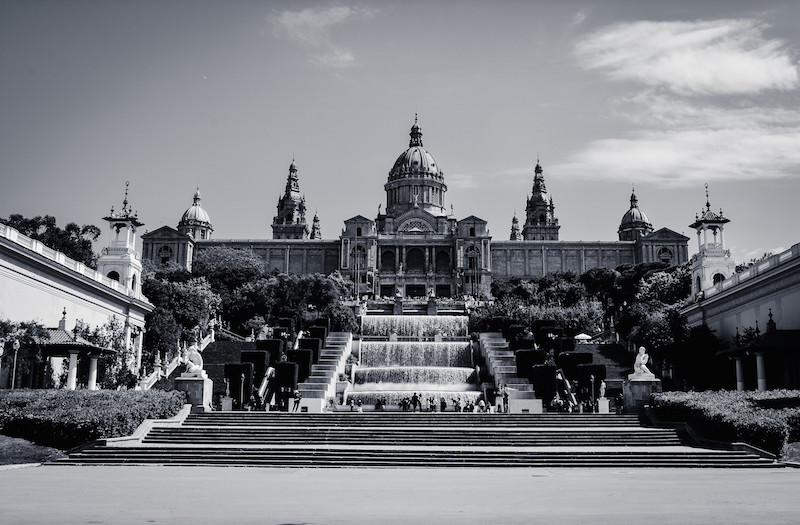
Another of the contemporary areas of the city can be found close to the neighborhood surrounding the Plaça d’Espanya and Palau Nacional. The infrastructure here is breathtaking with huge columns serving as an entrance to the road leading to Palau Nacional.

why visit barcelona palau nacional

In many ways this is equivalent to the Champs Elysees in Paris, but in my opinion Barcelona wins this battle with such a gorgeous construction at the end. Numerous waterfalls and fountains are directly in front of this museum, yet the real beauty lies within the construction of the building.

visit barcelona spain

Modern Design

Modern architecture throughout Barcelona is becoming more apparent, as architects are inspired to challenge native locals to appreciate other constructions away from Gaudi. Although much of the modern day design is very unlike anything Gaudi designed, there is enough in the vibrant color choices to ensure his inspiration lives on.

olympic stadium barcelona

Whether it’s the remarkable design of Jean Nouvel’s Agbar Tower in the heart of the city, or perhaps you are intrigued by the construction of the Estadi Olímpic de Montjuic, there is plenty to see around Barcelona to prove that this city has successfully blended old with new!

camp nou barcelona

The ‘Camp Nou’ stadium, home of the mighty FC Barcelona football team, is another impressively structured design. The Hop-On, Hop-Off city tour bus takes you directly past the stadium and after changing from the blue line to the red line on Avenue Diagonal, there are a number of gorgeous spots on this route worth experiencing.

torre calatrava

As you leave the confines of the city center, head towards Olympic Park and the home of the 1992 Summer Olympics. The scene is set with the gorgeous Olympic stadium but another impressive structure is the weird yet wonderful design of the Torre de Calatrava, a telecommunications tower that is inspired by the idea of an athlete holding the Olympic flame.

olympic stadium barcelona spain

Summary

Looking at reasons why you should visit Barcelona, I really could have given recommendations from a variety of angles. Cuisine, culture and of course architecture are all eye-catching reasons to explore this beautiful city. We spent a hectic 48 hours exploring Barcelona, trying to find some of the hidden secrets that lie within the medieval walls, but of course the beauty lies everywhere you look as you explore every part of the city.

We are both really excited about re-visiting Barcelona to hopefully find some more hidden gems and spend more time taking in the stunning architecture that fills the entire city.

Disclaimer – We would like to thank Turisme de Barcelona for providing us with 2 press cards for our trip. These are solely our personal opinions/experiences and we were not financially compensated for this post. 


A Guide to Gaudi Architecture in Barcelona

13

When you think about some of the finest architects from around the world, we may all have different names that spring to mind. However, if your background is associated with Spanish history, there is likely only one name on the tip of your tongue – Antoni Gaudi. Gaudi architecture is stereotypically represented throughout Barcelona and as you explore this beautiful city it is hard to avoid seeing his iconography depicted throughout the neighborhoods.

In his prime during the late 19th Century, Gaudi has almost single-handedly produced a myriad of fine architectural buildings and constructions throughout the heart of Spain, most noticeably in the city of Barcelona.

History of Gaudi

Antoni Gaudi was a Spanish Catalan who became famous for his focus on Catalan Modernism. His individualistic, unique approach of designing buildings around Barcelona are clearly influenced by his key interests – architecture, nature and religion.

Gaudi’s work is typified through the vibrant colors and unique variation he incorporated into the design of his work. As we contemplate why and how Gaudi separated himself from his fellow architects during this era, it is noticeable through every intricate detail that he meticulously designed and implemented.

However, this methodical approach didn’t come without a major flaw that is still noticeable to this day as you explore one of Spain’s major cities – his failure to complete the most iconic landmark, La Sagrada Familia. But of course, this was no fault of his and to this day we are still seeing modern day architects attempting to complete his most famous legacy!

gaudi barcelona architecture

It’s no surprise to hear that seven of Gaudi’s works have been declared as UNESCO World Heritage Sites over the last few decades.

Let’s take a stroll around Barcelona and explore some of Gaudi’s finest masterpieces and you will soon find out why visiting Barcelona is all about Antoni Gaudi on every other street corner.

Park Güell

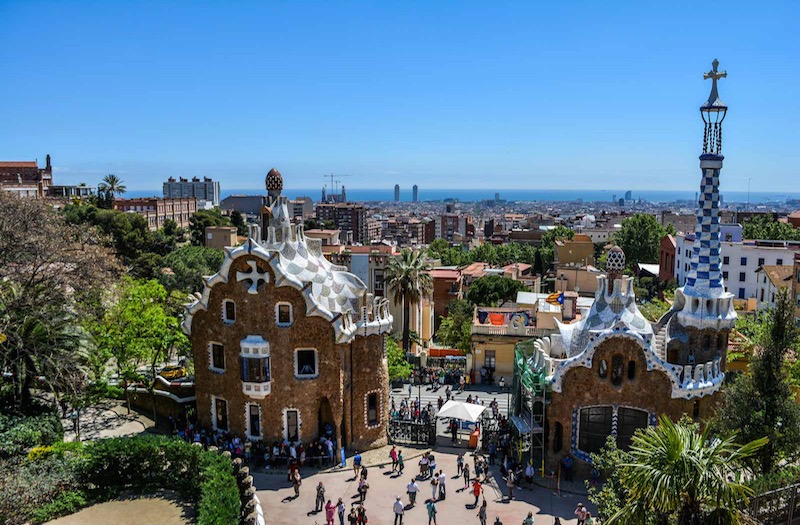
During our recent visit to Barcelona, our first stop was to see Park Guell. After passing by the infamous La Sagrada Familia (more on that later!), we started the hike along Carrer de Larrad which gets gradually steeper but is well worth it. Passing by a number of gift shops and local side streets that provide ample ‘off the beaten path’ photo opportunities, we arrived outside the gates of the gorgeous Park Guell.

gaudi park guell

Park Guell is one of Gaudi’s most decorative and extensive developments. The construction of this public park was directed by Gaudi in the early 20th century for Count Eusebio Güell and even outside the gates you can see Gaudi’s finest work on show. His iconic colorful tiles line the exterior walls with a decorative Park Guell logo intricately designed with equally beautiful tile-work.

park guell gaudi architecture

As you walk through the gates, you are presented with a steep, winding staircase though the iconic landmark here has to be the dragon. Known as ‘El Drac’, this colorful creature provides a memorable, symbolic representation of Park Guell and in many ways of Barcelona in general.

el drac gaudi park guell

The upper plaza of Park Guell is a mingling point for visitors to relax and observe the stunning views across Barcelona’s finest landscapes.

park guell plaza

park guell

Casa Batlló

As you move towards the center of Barcelona’s thriving business district, you can wander along the Passeig de Gracia and stumble across several of Gaudi’s impressive designs. In the heart of this street is Casa Batllo which attracts attention in much the same fashion as the other Gaudi inspirations around the city.

casa batllo

Constructed in 1877, this building (at least the interior) was far from what we can see today. In many ways, this was originally just a standard design with very little in terms of Gaudi’s flair and flamboyancy to show. However, when this was purchased by Joseph Battlo at the turn of the 20th century, he hired Gaudi to renovate and provide a more personal touch to the design.

casa batllo

Casa Milà/La Pedrera

The second Gaudi design along the Passeig de Gracia is Casa Mila or more commonly referred to as La Pedrera. A direct comparison with Casa Batllo makes this a lot less aesthetically pleasing, that is if you are looking for typical Gaudi vibrant color scheme.

la pedrera

However, what makes La Pedrera unique is the size and scope of this building as it stands out on the corner of the street.

la pedrera gaudi

The exterior has a real subtle way of standing out among a crowd of more modern designed constructions. Just as with all other Gaudi designs, it is easy to spot La Pedrera from a distance. A gorgeous spiral staircase inside is an added feature making this an extremely worthwhile visit and entrance fee (a little expensive at 27 Euros but is likely to provide more value than many other Gaudi designs).

Casa Vicens

Casa Vicens is a notable building in Gaudi’s fine portfolio of constructions because it was his first commissioned design throughout the city of Barcelona. Unlike many of the other architectures mentioned here, Casa Vicens is located along Carrer de les Carolines which is one of those stereotypically hidden side streets that you stumble across wandering around Barcelona.

casa vicens

Dating back to the 1880’s, Casa Vicens was designed as a private residence and only until recently this has always been the case. It is now currently being transitioned into a public house for visitors and it is hoped that by 2016, people will be able to appreciate the detailed design of the interior as well as outside.

But for now, take a moment to appreciate the beauty of a residential home that is far different to anything you would ever imagine living in! Gaudi was a perfectionist and Casa Vicens is an example of how this approach shines through with all his constructions.

La Sagrada Familia

Of course we had to save the best until last! The most popular landmark not only in Barcelona but also the whole of Spain, Gaudi’s La Sagrada Familia is a stunningly beautiful piece of architectural genius. However, the beauty of the Sagrada Familia is even more magnified given that it is still unfinished.

la sagrada familia gaudi

Whether this be one of Gaudi’s late regrets following his death in 1926, it is unbelievable to think that construction is still ongoing to complete this gorgeous basilica. The problem was that following Gaudi’s death when only a quarter of La Sagrada Familia was complete, continued construction relied solely on private funding and much of this dried up during the Spanish Civil War.

la sagrada familia

The projected completion date is 2026 to celebrate Gaudi’s centenary and I am convinced that this will be an extremely hectic location once finished. Even from the outside, La Sagrada Familia is unlike anything else in the world that I have seen, so it will be interesting to see how construction evolves and whether the modern day architects can mirror the hopes and everlasting dreams of the late Antoni Gaudi!

Summary

Five very different architectural designs but one common theme – Antoni Gaudi! As you wander around Barcelona, Gaudi’s constructions are easily visible. These are just a very small number of buildings constructed by Gaudi but I think they provide a nice blend of contrast, primarily because of how Gaudi envisioned they would be used.

gaudi architecture

From the hustle and bustle of queuing for hours to catch a glimpse of the interior of the unfinished La Sagrada Familia to the quiet back streets that surround Casa Vicens, Gaudi has undoubtedly left his mark in Barcelona. He will always be an iconic figure in global architecture and honestly, a trip to Barcelona or Spain in general wouldn’t quite be the same without exploring his finest works!

You can see more pictures of our experiences exploring Gaudi’s fine architecture here: Barcelona Photo Gallery.

Disclaimer – We would like to thank Turisme de Barcelona for providing us with 2 press cards for our trip. These are solely our personal opinions/experiences and we were not financially compensated for this post.